Philippines eSIM 2026: Manila, Cebu, Palawan and island hopping
mySIM24 Redaktion · Published 8/11/2026 · Updated 9/21/2026 · 7 min read
Planning your trip? Compare current eSIM plans for Philippines and check your device’s compatibility.
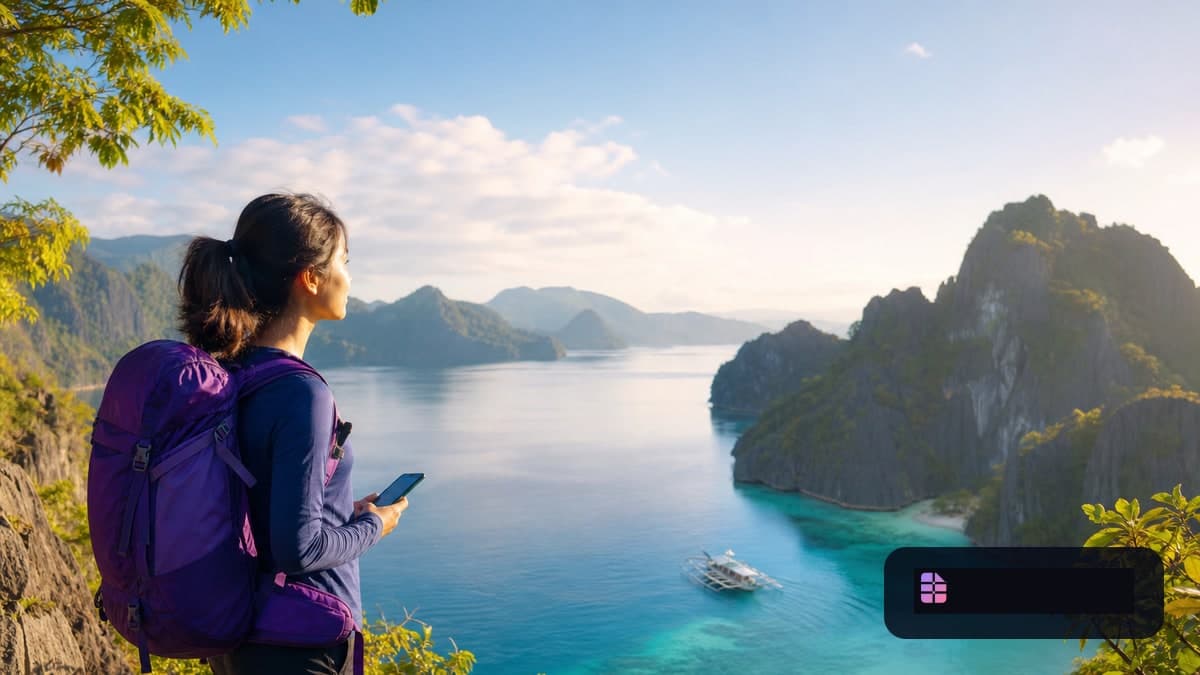
The following data amounts are editorial planning assumptions, not measured app averages or a usage guarantee. Calculate your own daily use × trip days plus a reserve you choose. Video, backups and hotspot use can change requirements substantially.
Philippines eSIM 2026: mobile data for a trip across many islands
The Philippines is not a destination you can plan as if it were one city. A Manila–Cebu–Bohol–Palawan itinerary can include domestic flights, ferries, remote accommodation and very different mobile conditions. So the key question is not only how many gigabytes you need. It is also when you need to be connected, and how independent you want to be from finding a SIM shop after arrival.
For many visitors, a travel eSIM is the simplest starting point. Install it before departure, select it for mobile data after landing, and use maps, hotel messages, ride-hailing, flight updates and messaging immediately. If you are staying for several weeks, need a Philippine phone number, or plan to work from less-connected areas, compare that convenience with a locally issued SIM or eSIM.
This guide was reviewed on 11 August 2026. Network experience varies by island, exact location, building, weather and partner network, so it should never replace a current local coverage or weather check.
Quick choice: travel eSIM or local SIM?
| Travel situation | Usually the better fit | Reason |
|---|---|---|
| 7–21 day holiday and classic route | Travel eSIM | Installed before flying; no need to find a shop immediately |
| Manila, Cebu, Bohol, Boracay and Palawan | Travel eSIM plus offline preparation | Convenient during flight and ferry transitions |
| Longer stay or workation | Start with travel eSIM; assess local option | A local plan and number can help in daily life |
| Remote islands or frequent ferries | eSIM plus offline backup | Mobile service is useful, but not guaranteed |
| Bank codes sent to your home number | Dual SIM setup | Travel eSIM handles data while the home line remains available for SMS |
A travel eSIM is commonly a data-only product. It can support WhatsApp, maps, email, translation and travel apps without automatically giving you a Philippine number. A local tourist SIM or local eSIM may include a number, but registration and onboarding requirements can apply.
Why mobile planning matters more in the Philippines
The country’s geography is the reason. A reliable connection in central Manila says little about a resort, pier or inland road on another island. Even within the same island, signal and speed can vary between a beach, a town, a hotel room and a boat departure point.
Avoid relying on broad claims such as “nationwide 5G” or “best network.” They do not guarantee service at your exact accommodation. Before buying, check which Philippine partner network or networks a travel eSIM can use. If that is not stated clearly, ask the provider before you commit.
For a standard Manila–Cebu–Bohol–Palawan route, a well-prepared travel eSIM is often enough. For extended stays on smaller or remote islands, treat mobile data as an important tool rather than your only safety plan. Download maps, save tickets, screenshot addresses and allow extra time around transfers.
Set up your travel eSIM before departure
Install it while you still have dependable Wi-Fi at home or before your first flight.
- Confirm your phone supports eSIM. See our eSIM-compatible devices guide.
- Install the eSIM before travel, following the plan’s activation rules.
- Label the lines clearly, for example “Home” and “Philippines data.”
- Set the travel eSIM as the data line; retain your home SIM for calls and essential SMS if needed.
- Enable data roaming only on the travel eSIM if its provider instructs you to do so. Keep mobile data roaming off on the home line unless you deliberately want to use it.
For setup help, use our eSIM installation guide. If bank verification messages matter, prepare your configuration with travel eSIM and TAN/SMS abroad.
How much data should you plan for?
Your travel style matters more than the destination name. In the Philippines, maps, ride-hailing, ferry and flight pages, restaurant searches, messaging and social media can all be frequent daily uses.
- 3–5 GB for 7 days: maps, messaging, research and occasional uploads.
- 5–10 GB for 14 days: an active itinerary, daily navigation and moderate social use.
- 10–20 GB for 30 days: longer trips, frequent transfers, cloud use or disciplined remote work.
- More or unlimited: only after checking fair-use rules, speed limits and hotspot conditions.
Video uploads, streaming and automatic photo backup consume data fast. Download offline map areas over Wi-Fi, restrict photo sync to Wi-Fi and store boarding passes and ferry tickets locally. Read our travel data allowance guide for more planning detail.
Manila, Cebu and Palawan: practical differences
Manila
In Metro Manila, mobile data mainly makes the journey smoother: navigating traffic, arranging rides, contacting accommodation and checking bookings. Have your first hotel address saved offline before landing rather than depending on airport Wi-Fi.
Cebu and Bohol
Cebu is a major hub for multi-stop trips. Mobile data helps with rides, tour coordination and changing ferry information. On a ferry to Bohol, download tickets, directions and contacts before boarding: terrestrial service at sea cannot be assumed.
Palawan, Coron and El Nido
A travel eSIM is particularly convenient here because you can be online after arrival without searching for a shop. But island-hopping tours and remote coves are exactly where service may be intermittent. Agree meeting points clearly and keep essential travel details offline.
Local SIM registration: a key distinction
Locally issued Philippine SIMs are covered by the SIM Registration Act. For foreign tourists, the law lists travel documents, proof of a Philippine address and evidence of return or onward travel among the registration requirements. Provider forms, time limits and document checks can change, so check the current instructions of the local operator before paying.
A global travel eSIM is not automatically the same as a locally purchased Philippine SIM. If you only need data, a travel eSIM often avoids the initial in-country administrative step. If a local number is essential for a specific service or a long stay, the local option may still suit you better.
Globe advertises a Prepaid Traveler eSIM for vacation and business visitors. That confirms that local tourist eSIM products exist, but current package terms and registration requirements should be verified directly with the operator just before purchase.
Typhoons, ferries and offline readiness
Weather awareness is especially relevant in August. PAGASA states that its area sees about 20 tropical cyclones on average each year, with the peak of typhoon activity from July through October. That does not mean every trip in this period is disrupted; it does mean flights, boats and tours can change at short notice.
Keep these available:
- booking references, addresses and secure copies of documents;
- offline maps for the first days;
- a charged power bank and cable in hand luggage;
- screenshots of operator and accommodation contacts;
- current official weather notices and local instructions.
Do not assume a travel eSIM will work on a ferry far from shore. It uses terrestrial partner networks, and service may disappear offshore. Also avoid accidentally joining a costly ship network. See cruise and ferry roaming for the difference.
Frequently asked questions
Does WhatsApp work with a Philippines eSIM?
Usually, yes. WhatsApp works over mobile data, and your existing WhatsApp number remains unchanged unless you re-register the app with another number. A data-only eSIM does not replace your phone number.
Should data roaming be on?
For many travel eSIMs, yes, if the provider’s instructions say so. It enables technical access to a partner network. Check the setting separately for each line and keep your home SIM’s mobile data controlled.
Can I use a hotspot?
It depends on the plan. Check tethering explicitly before purchase, especially with unlimited offers. Our unlimited eSIM and fair-use guide explains the checks that matter.
Bottom line
For most Philippines holidays, a travel eSIM is the low-stress way to get online immediately. A local SIM or eSIM becomes more attractive if you stay longer, need a local number or have a specific local tariff in mind. In either case, prioritize preparation: understand the plan’s network information, save key items offline and monitor weather when island hopping.
Sources
- Globe, “Prepaid Traveler SIM and eSIM”, accessed 11 August 2026: https://www.globe.com.ph/international/traveler-sim
- Republic Act No. 11934, “SIM Registration Act”, 10 October 2022: https://ldr.senate.gov.ph/sites/default/files/2023-04/3677033156%21.pdf
- PAGASA, “Tropical Cyclone Information”, accessed 11 August 2026: https://www.pagasa.dost.gov.ph/climate/tropical-cyclone-information
- UK Foreign Travel Advice – Philippines, updated 28 July 2026: https://www.gov.uk/foreign-travel-advice/philippines